

Become a donor
Who can be an egg donor in India: age, rules and registration
A woman aged 23 to 35 can be an egg donor in India. She may donate once in her life, must have an Aadhaar, and must be screened and registered by a registered ART Bank. Married or unmarried, with or without a child, she can donate.
(Act s.27(2)(b), s.27(4), s.27(6))
Medically reviewed by Dr Yashodhara. Updated 12 November 2026.


Registered ART Bank
URN MH/AB/2022/10691/Mumbai/83
The law in brief
The rules that decide who can donate
Only a registered ART Bank, registered as an independent entity, may screen egg donors and supply them (Act s.27(1)).
The bank obtains eggs from women aged 23 to 35 (Act s.27(2)(b)). A woman may donate once in her life (Act s.27(4)).
The bank records the donor’s name, Aadhaar and address, and takes a written confidentiality undertaking (Act s.27(6); Rules r.15). The donor is tested for HIV 1 and 2, Hepatitis B, Hepatitis C and syphilis (Act s.21(b); Rules r.10, r.14).
The eggs of one donor go to one couple or one woman only (Act s.27(3)). Details of the donor are kept confidential (Act s.21(e)).
Zoi Fertility is a registered ART Bank, URN MH/AB/2022/10691/Mumbai/83. This is the programme behind Egg Donor India.
Eligibility at a glance
What it means for you
| Rule | What it means for you | Citation |
|---|---|---|
| Age 23 to 35 | You must be in this age band when you donate. | Act s.27(2)(b) |
| Once in a lifetime | If you have donated before, you cannot donate again. | Act s.27(4) |
| Aadhaar | The bank must record your Aadhaar, name and address. Keep your Aadhaar ready. | Act s.27(6); Rules r.15 |
| Married or unmarried | Not a condition. Both can donate. | Act s.27(2)(b); Government of India clarification, File No. I.11019/51/2022-HR, 29 Nov 2022, Q3 |
| With or without a child | Not a condition. Both can donate. | Act s.27(2)(b); same clarification |
| Screened by an ART Bank | Only a registered ART Bank can screen and register you as a donor. | Act s.27(1) |
| Health tests | HIV 1 and 2, Hepatitis B, Hepatitis C and syphilis. | Act s.21(b); Rules r.10, r.14 |
| Written informed consent | You give consent in Form 13 after the team explains the process. | Act s.22(1)(a); Rules r.13 |
| Parental rights | You give up all parental rights. The child is the legal child of the recipient couple or woman. | Act s.31(1) and (2) |
| One donor, one recipient | Your eggs go to one couple or one woman only. | Act s.27(3) |
| 12 months of insurance | You are insured for 12 months against complications of egg retrieval. | Act s.22(1)(b); Rules r.12 |
The process
Five steps for a donor
- 1Check the basicsAge 23 to 35, never donated before, Aadhaar in hand.
- 2Contact usThe ART Bank team explains the steps and answers your questions.
- 3ScreeningHealth tests and a medical review, done by the registered ART Bank.
- 4Written consent and registrationYou give written informed consent in Form 13, your Aadhaar and address are recorded, and you sign a confidentiality undertaking (Act s.22(1)(a), s.27(6); Rules r.13, r.15).
- 5Retrieval at an ART clinicStimulation and egg retrieval happen at a registered ART clinic, not at the bank. You are insured for 12 months (Act s.22(1)(b); Rules r.3(1)(ii), r.13(1)(c)).
Safety and counselling
Retrieval follows the ART Regulations 2023: all formed follicles are retrieved and stimulation is controlled to prevent OHSS (G.S.R. 269(E), 5 Apr 2023).
Before you consent, the team explains the process, the tests and what giving up parental rights means (Act s.31). You can ask questions at every step.
Dr Yashodhara: A donor who undergoes stimulation in a controlled environment aims for about 7 mature, good follicles. Sometimes she may get 7 to 10 oocytes. The medical team and the embryologist take you through the process and explain every step for the donor, and for you as the woman undergoing embryo transfer. Every safety point is checked, explained and rechecked.
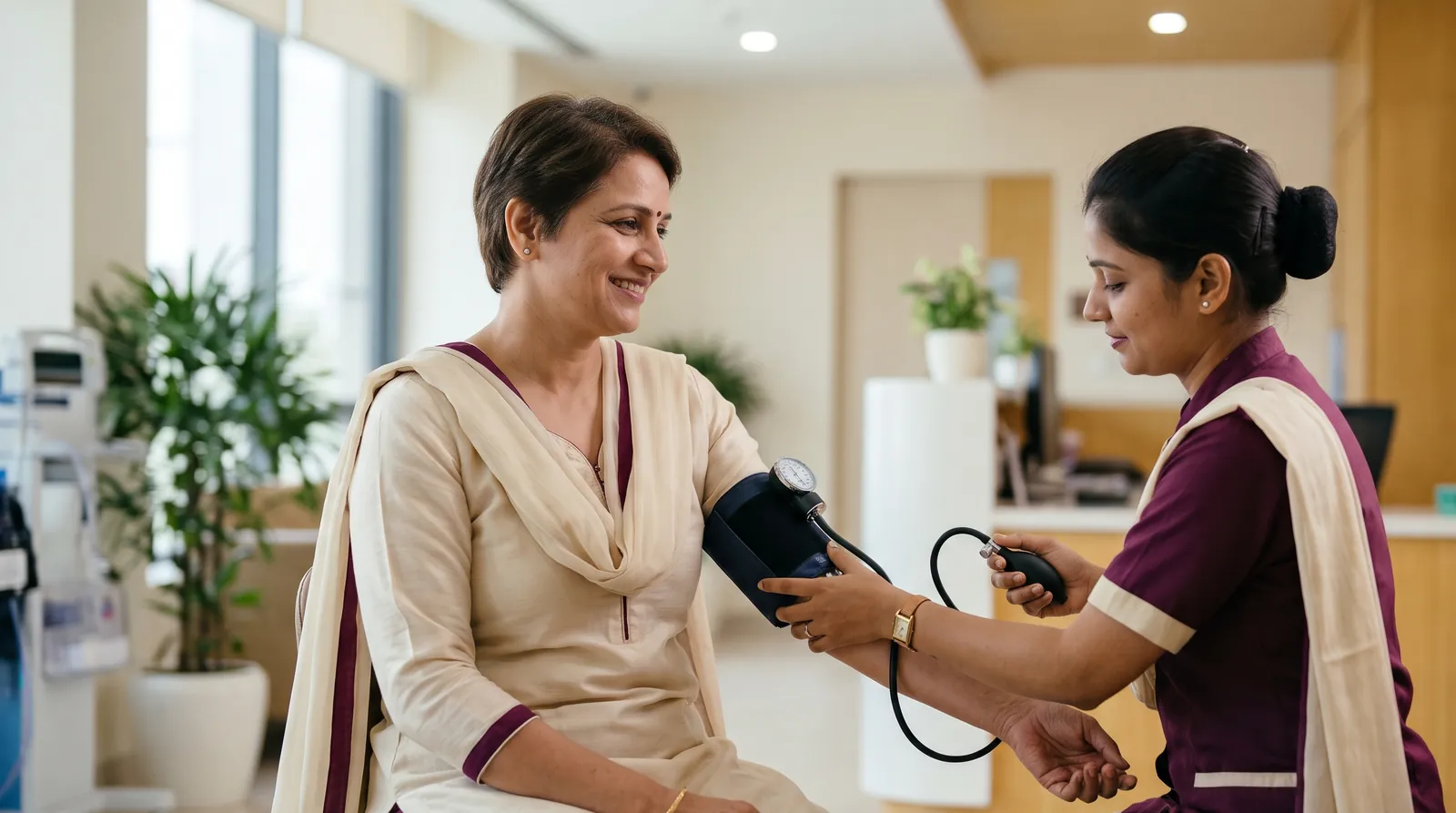
Confidentiality
Your identity stays private
Information about the couple, the woman and the donor is kept confidential. It can be disclosed only to the National Registry database, in a medical emergency at the couple’s request, or by court order (Act s.21(e)). You also sign a written confidentiality undertaking (Act s.27(6)).
We show no donor photos on this website.
Living abroad
Can a relative abroad donate?
Yes, if she holds an Indian Aadhaar. She must meet the same rules: age 23 to 35, once in her life, screened and registered by a registered ART Bank (Act s.27; Government of India clarification, File Nos. I.11019/39/2022-HR, 15 Nov 2022, Q2 and Q4, and I.11019/34/2022-HR, 1 Nov 2022).
Nothing is sent into or out of India. The donation happens in India. Read our page for NRI and OCI families.
Screening tests
The bank tests every donor for HIV 1 and 2, Hepatitis B, Hepatitis C and syphilis. The doctors may ask for other checks, and your Egg Donor India contact will tell you which ones apply to you. Passing the first checklist is the start: the bank still screens every applicant. Our quick list is in the post Egg donor eligibility checklist.
Questions
Questions women ask
A woman aged 23 to 35 who has not donated before, holds an Aadhaar, and is screened and registered by a registered ART Bank (Act s.27(2)(b), s.27(4), s.27(6)). Marital status and children are not conditions.
The age band is 23 to 35 years (Act s.27(2)(b)). A woman outside this band cannot be registered as a donor.
Yes. Section 27 sets age and not marital status, and the Government of India has clarified that any woman may donate (File No. I.11019/51/2022-HR dated 29 Nov 2022, Q3).
No. A woman may donate once in her life (Act s.27(4)). The bank asks about earlier donation during screening.
Yes. The bank must record the donor’s Aadhaar, name and address (Act s.27(6); Rules r.15). Keep it ready before you contact us.
HIV 1 and 2, Hepatitis B, Hepatitis C and syphilis (Act s.21(b); Rules r.10, r.14). The doctors may ask for other checks, and the team will tell you which.
Only a registered ART Bank, registered as an independent entity, may screen and register egg donors (Act s.27(1)). Agents and brokers cannot. See how to verify an ART Bank.
No. A bank cannot supply the eggs of a single donor to more than one commissioning couple (Act s.27(3)). Your eggs go to one couple or one woman.
No. The donor gives up all parental rights, and the child is the legal child of the commissioning couple (Act s.31(1) and (2)). The team explains this before you sign consent.
Yes. Information about the donor is kept confidential, with the limited exceptions in Act s.21(e). You also sign a confidentiality undertaking (Act s.27(6)).
Yes. A 12 month insurance cover for the donor is part of the programme, against complications of retrieval (Act s.22(1)(b); Rules r.12).
Yes, if she holds an Indian Aadhaar and meets the same rules, after screening and registration by a registered ART Bank (File Nos. I.11019/39/2022-HR dated 15 Nov 2022, Q2 and Q4). Eggs are not imported or exported.
Sources: ART Act 2021, ART Rules 2022, ART Regulations 2023, Department of Health Research clarifications. This page explains the law as published. It is not legal advice.
Check your eligibility privately
No obligation. One coordinator will walk you through every step.