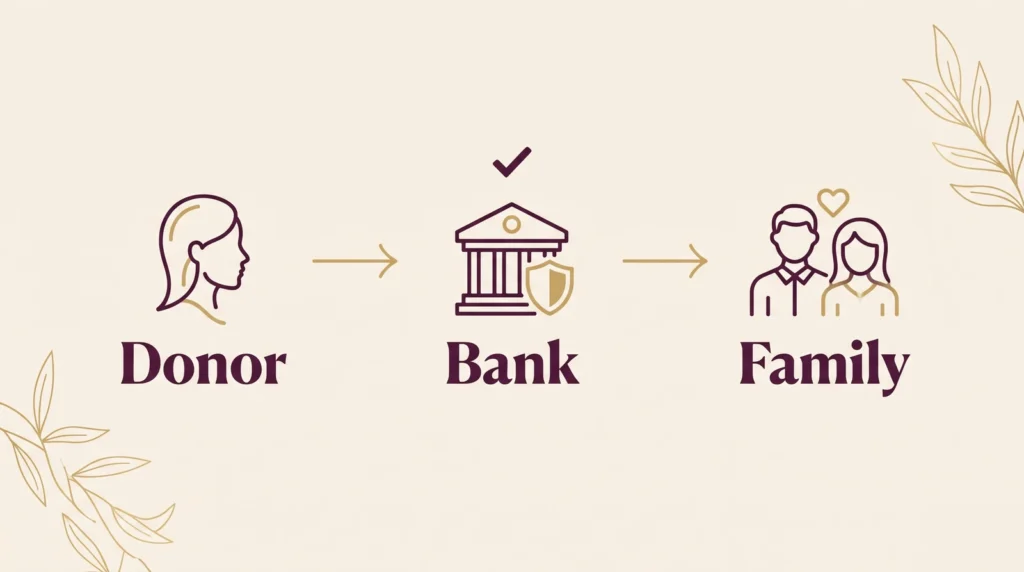
Short answer. To donate eggs in India, you apply to a registered ART Bank, not to an agent. You must be 23 to 35 years old and may donate only once in your life (Act s.27(2)(b), s.27(4)). The bank screens you, you give written consent, a registered clinic does the cycle, and you rest afterwards. Egg donation for commercial gain is not allowed, so it is not done for money. Only your documented expenses may be reimbursed.
How do I donate eggs in India?
If you are thinking about it, welcome. This is a big and kind decision, and you are allowed to take your time. There are five steps, and you can stop and ask questions at any of them.
- Check that you are eligible.
- Contact a registered ART Bank.
- Screening and consent.
- The cycle: medicines and retrieval.
- Recovery.
This can feel overwhelming. How does the process work? How many injections will I have to take? What time do I have to come? We understand this is not easy, and that is why we are here for you. We have a psychologist too, who helps you through the process, apart from the doctor counselling you. We want to make sure you are protected and fully informed at every step. Your role is voluntary, and we make sure your comfort, safety, priorities and preferences are taken care of.
Step 1: Check that you are eligible
You must be 23 to 35 years old, and you can donate only once in your life (Act s.27(2)(b), s.27(4)). You will need your Aadhaar and your address, because the bank must record them (Act s.27(6)).
You do not need to be married, and you do not need to have a child. The Government of India has clarified that any woman may donate, subject to the Act and Rules (Government of India, Ministry of Health and Family Welfare (Department of Health Research), File No. I.11019/51/2022-HR dated 29 Nov 2022, Q3). Our Eligibility guide explains each point, and the short Check my eligibility form tells you where you stand.
Step 2: Contact a registered ART Bank
Only a registered ART Bank may screen donors and supply them (Act s.27(1)). So write to the bank yourself. Do not go through a middleman. Ask for its registration details and check them before you share any documents.
Zoi Fertility is the registered ART Bank behind the Egg Donor India programme (URN MH/AB/2022/10691/Mumbai/83). You can start on our Become a donor page. If you want, bring a trusted family member or friend to your first conversation.
Step 3: Screening and consent
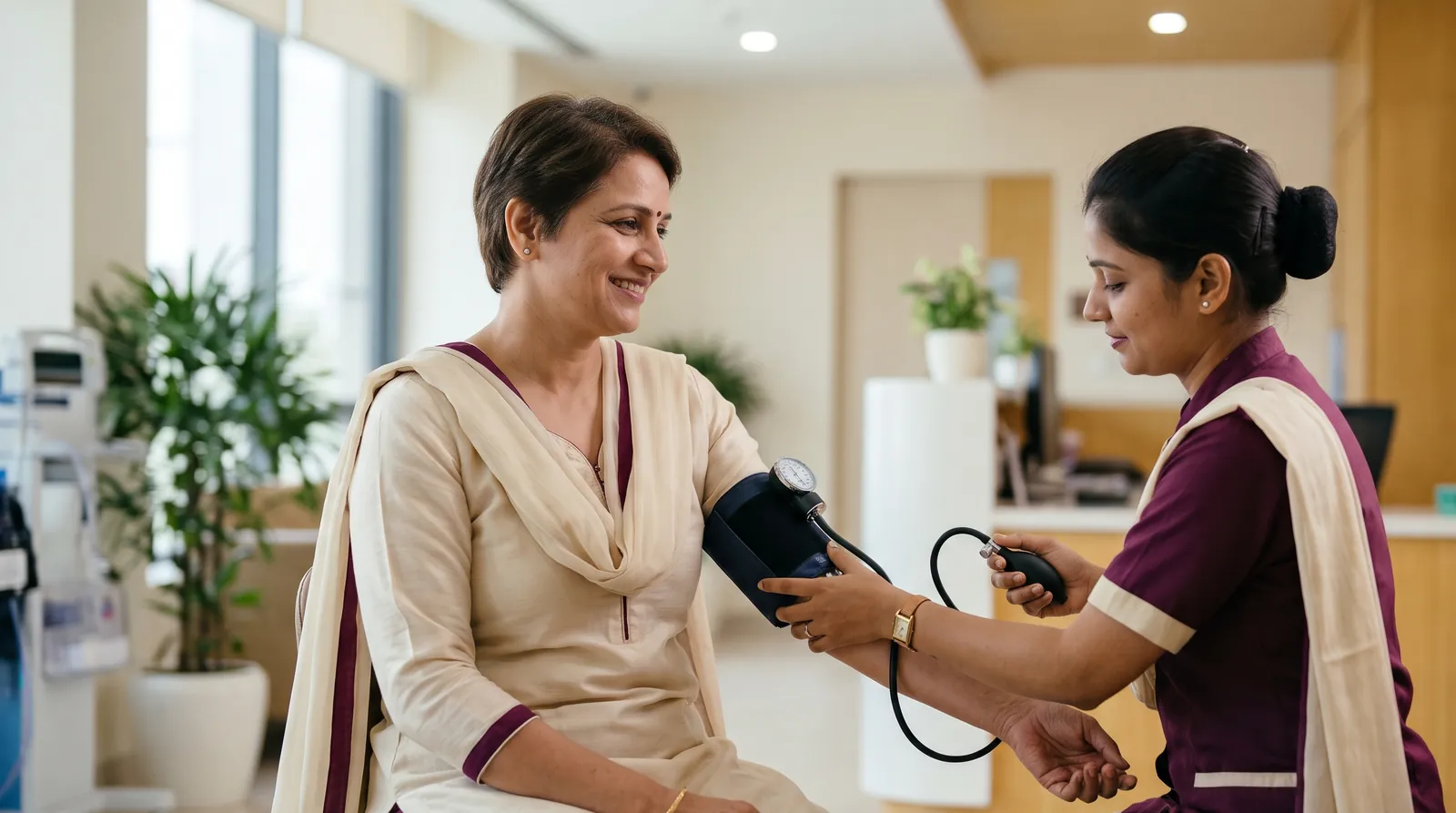
The bank screens you. You are tested for HIV 1 and 2, Hepatitis B, Hepatitis C and syphilis (Act s.21(b); Rules r.10 and r.14). The doctors may also check your general health.
You then give written informed consent in Form 13 (Act s.22(1)(a); Rules r.13). You also sign a written promise to keep things confidential (Act s.27(6)). You give up all parental rights over any child born from your eggs (Act s.31(1) and (2)). Read every line. Ask for anything you do not understand to be explained, and ask for a copy of what you sign.
Step 4: The cycle
This happens at a registered ART clinic, not at the bank (Rules r.3(1)(ii)). For some days you take hormone medicines, usually by injection, so that several eggs mature together. The team monitors you during this time. The eggs are then collected in a short procedure, and surgical retrieval is done at a Level 2 clinic (Rules r.3(1)(ii)). The clinic will tell you what anaesthesia or sedation is used.
You are insured for 12 months against complications of retrieval. The couple or woman receiving the eggs buys that cover from an IRDA recognised insurer. You do not pay for it (Act s.22(1)(b); Rules r.12).
After the cycle, you will be called back for aftercare and, if the doctor advises, medicines to help recovery. Please avoid exercise just before and after egg collection. Restart your routine only when your doctor says you can.
Step 5: Recovery
Most women rest for the remainder of the day and stay under watch until the clinic says they can go home. Some mild discomfort can happen. Follow the clinic’s advice, and call the treating clinic if you feel unwell afterwards. Our guide to the whole Step by step process covers what to expect.
Your eggs go to one couple or woman only (Act s.27(3)), and your details stay confidential, apart from the limited cases in Act s.21(e). You cannot donate again, because the law allows one donation in a lifetime.
Can I donate eggs for money in India?
No. Egg donation for commercial gain is not allowed in India. The Act prohibits selling gametes (Act s.33(1)(b)). What the law does allow is reimbursement of the expenses you actually had, such as travel, food, stay and loss of employment, as long as you make no monetary gain (File No. I.11019/39/2022-HR dated 15 Nov 2022, Q11 to 14).
So keep your tickets and bills. We cannot give you a figure to expect, because it depends only on your documented costs. Our post Are egg donors paid in India? explains this in full.
What you should never do
- Never use an agent. Using intermediaries to obtain gamete donors is an offence (Act s.33(1)(g)). A genuine bank does not ask you for a fee to donate.
- Never accept cash offers. If anyone offers you a sum of money to donate, or asks you to pay to be listed, walk away. Selling gametes (Act s.33(1)(b)) and exploiting a donor (Act s.33(1)(d)) are both offences.
- Never share your Aadhaar with unregistered people. Send it only to a bank whose registration you have checked.
- Never sign something you have not read. Take your time.
If you have already spoken to someone like this, you have not done anything wrong. Stop the conversation and contact a registered bank.
Ready to take the next step? Check my eligibility or become a donor.
Questions
How can I donate eggs in India? Apply to a registered ART Bank. It screens you, takes your written consent, and a registered ART clinic does the cycle (Act s.27(1), s.22(1); Rules r.3(1)(ii)).
Can I become an egg donor in India if I am unmarried or have no children? Yes. The Act sets age, not marital status or children. You must be 23 to 35 and may donate only once (Act s.27(2)(b), s.27(4); File No. I.11019/51/2022-HR dated 29 Nov 2022, Q3).
Can I donate eggs for money in India? No. Egg donation for commercial gain is not allowed. Documented expenses may be reimbursed, with no monetary gain (Act s.33(1)(b); File No. I.11019/39/2022-HR dated 15 Nov 2022, Q11 to 14).
Do I need an agent to donate eggs? No, and you should not use one. Using intermediaries to obtain gamete donors is an offence (Act s.33(1)(g)).
Is the donor insured? Yes. 12 months of cover for complications of retrieval is bought for you by the couple or woman receiving the eggs (Act s.22(1)(b); Rules r.12).
References
- Assisted Reproductive Technology (Regulation) Act, 2021 (Act No. 42 of 2021): section 21(b) and 21(e); section 22(1); section 27(1) to (4) and (6); section 31(1) and (2); section 33(1)(b), (d) and (g).
- Assisted Reproductive Technology (Regulation) Rules, 2022 (G.S.R. 419(E)): rules 3(1)(ii), 10, 12, 13 and 14.
- Government of India, Ministry of Health and Family Welfare (Department of Health Research): File No. I.11019/51/2022-HR dated 29 Nov 2022; File No. I.11019/39/2022-HR dated 15 Nov 2022.
This page explains the law as published. It is not legal advice. It is general information and not medical advice for you.